



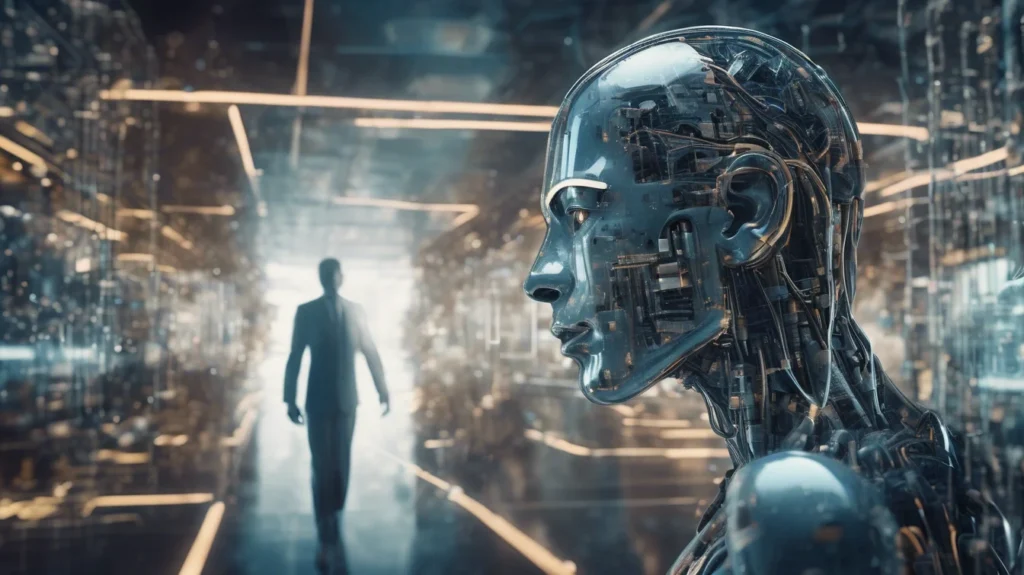

Artificial Intelligence (AI) is no longer a distant dream—it’s reshaping our world at breakneck speed. In 2024, we witnessed breakthroughs that felt like science fiction, from video-generating neural networks to AI agents controlling computers. But there were stumbles too, moments that reminded us progress isn’t always smooth. As I reflect on the past year, I can’t help but wonder: where is this all leading? This article dives into the highs and lows of 2024, offers a comparative analysis of key players, and makes bold predictions for what’s coming in 2025–2026. Spoiler: it’s going to be wild.
Looking Back: 2024’s Triumphs and Missteps
What Blew Us Away
- Video Neural Networks: A Creative Explosion
The year kicked off with OpenAI’s Sora, a text-to-video model that promised to redefine content creation. Its announcement sparked a frenzy, inspiring competitors like Kling (from China’s Kuaishou) and Runway to roll out tools that churn out near-cinematic videos from simple prompts. Imagine typing “a cyberpunk city at dusk” and getting a polished clip in minutes. These tools aren’t just for pros—they’re empowering anyone to tell visual stories. I’ve spent hours tinkering with them, and the results are mind-boggling, though they make me question: are we all filmmakers now? - AI Agents: The Dawn of Autonomy
AI agents took a leap forward with Anthropic’s Claude and OpenAI’s Operator. These aren’t your average chatbots—they can navigate your computer, execute tasks, and even debug code. It’s like having a digital intern who never sleeps. In demos, I saw agents book meetings, scrape data, and update spreadsheets, all from a single command. But here’s the catch: this tech is still in beta, and it feels like we’re handing over the keys to something we don’t fully understand. Exciting? Yes. Unsettling? A bit. - Emotional Avatars: Digital Twins Get Personal
Digital avatars went from clunky to eerily lifelike in 2024. Platforms like Synthesia and HeyGen now create virtual humans that mimic emotions, gestures, and voices with uncanny precision. I watched a demo where an avatar delivered a keynote speech, and the audience couldn’t tell it wasn’t real. These tools are game-changers for education, marketing, even virtual therapy. But they also make me wonder: when does “fake” become too real?
What Fell Flat
- Sora: A Hype Train Derailed
Sora was supposed to be the crown jewel of 2024, but its late release was a letdown. By the time OpenAI unveiled it, competitors like Kling and Kaiber had already matched or surpassed its capabilities. The hype built Sora up as a game-changer, but it landed as a “been there, seen that.” It’s a reminder that in the AI race, timing is everything. - Claude: Brilliant but Offline
Anthropic’s Claude outshone ChatGPT in 2024 with its nuanced, thoughtful responses. It’s the model I’d trust to write a heartfelt letter or analyze a complex problem. But there’s a glaring flaw: it can’t access the internet. In a world where real-time data is king, this feels like launching a smartphone without Wi-Fi. Claude’s potential is immense, but it’s stuck in 1995. - Automation Nightmares
Tools like Make.com promised to democratize AI automation—think Zapier on steroids, connecting neural networks to your workflows. The reality? They’re a labyrinth of menus and logic flows that demand a programmer’s mindset. I tried setting up a simple pipeline to auto-generate social media posts, and it felt like assembling IKEA furniture with missing screws. These tools are powerful but alienate anyone without coding chops.
Comparative Analysis: Who’s Leading the AI Race?
To make sense of 2024’s landscape and set the stage for 2025, let’s compare the heavyweights shaping AI: OpenAI (Sora, ChatGPT), Anthropic (Claude), and Chinese innovators (Kling, DeepSeek). I’ll also touch on regional dynamics, particularly the West vs. China.
Video Generation: Sora vs. Kling vs. Runway
- Sora (OpenAI): Hyped as a revolutionary text-to-video model, Sora delivers high-quality outputs but struggles with consistency (e.g., occasional artifacts in complex scenes). Its late release in 2024 meant it lagged behind competitors in market adoption. OpenAI’s strength lies in its brand and R&D, but Sora’s closed ecosystem limits accessibility.
- Kling (Kuaishou): China’s answer to Sora, Kling excels in generating vibrant, dynamic videos, often with fewer artifacts. Its open beta attracted millions, especially in Asia, due to lower costs and faster iterations. However, its interface and English support are clunky, hindering global reach.
- Runway: A Western alternative, Runway balances quality and usability. Its cloud-based platform integrates with editing tools, making it a favorite for creatives. Unlike Sora, it’s widely available, but it lacks Kling’s raw computational edge.
- Verdict: Kling leads for affordability and speed, Runway for usability, and Sora for potential (if OpenAI plays catch-up). China’s rapid deployment gives it an edge, but Western tools dominate in user experience.
Language Models: Claude vs. ChatGPT
- Claude (Anthropic): Claude’s strength is its human-like reasoning and ethical guardrails, making it ideal for sensitive tasks like legal analysis or creative writing. Its offline nature is a dealbreaker for real-time applications, but its responses are consistently sharper than ChatGPT’s.
- ChatGPT (OpenAI): ChatGPT remains the household name, with internet access and a massive plugin ecosystem. However, its outputs can feel generic, and it’s prone to “hallucinations” (making up facts). OpenAI’s Operator feature (AI agent capabilities) gives it a slight edge in automation.
- Verdict: Claude wins on quality, ChatGPT on versatility. If Anthropic adds internet access in 2025, Claude could dethrone ChatGPT. For now, OpenAI’s broader ecosystem keeps it ahead.
Regional Dynamics: West vs. China
- Western AI (USA/Europe): Companies like OpenAI, Anthropic, and Google lead in innovation and ethical frameworks. They benefit from robust funding and academic talent but face regulatory hurdles (e.g., EU’s AI Act) and high development costs. Their focus on user-friendly interfaces drives global adoption.
- Chinese AI: DeepSeek, Kuaishou, and Baidu are closing the gap with cheaper, scalable solutions. China’s state-backed infrastructure and massive datasets give it a computational advantage. However, censorship, language barriers, and less intuitive UX limit their global impact.
- Verdict: The West dominates in polish and trust, China in scale and speed. By 2026, China could overtake in video and hardware, while the West retains a lead in language models and ethics.
Key Takeaway
2024 showed that no single player dominates. OpenAI’s brand power is fading as Chinese firms like Kuaishou and DeepSeek disrupt with affordability, and Anthropic carves a niche with quality. The race is tightening, and 2025 will hinge on who balances innovation with accessibility.
What’s Next: Predictions for 2025–2026
Now, let’s peer into the crystal ball. Based on 2024’s trajectory and my own musings, here are 11 trends I believe will shape AI’s future. These aren’t just tech predictions—they’re about how AI will redefine our work, creativity, and even our sense of self.
- AI Everywhere
By 2025, AI will be as ubiquitous as Wi-Fi. Apps without AI features—whether it’s a text editor missing a writing assistant or a CRM without predictive analytics—will feel like relics. Companies ignoring this will fade into obscurity. I’m betting we’ll see AI woven into everything from toasters to fitness trackers. It’s thrilling but raises a question: will we become too dependent? - AI Agents Evolve
AI agents like Operator and Claude’s prototypes will graduate from beta to mainstream in 2025. They’ll handle complex workflows—think scheduling, data analysis, even creative tasks—without breaking a sweat. But with great power comes great risk. I predict a major security breach involving an AI agent by mid-2025, forcing developers to prioritize encryption and user control. Still, the potential to free us from mundane tasks is worth the gamble. - Local AI Takes Over
Cloud-based AI is convenient but raises privacy concerns (looking at you, Microsoft Copilot). Local models like xAI’s Grok and DeepSeek will run on laptops and phones, delivering ChatGPT-level performance without phoning home. By 2026, I expect most mid-range smartphones to ship with built-in LLMs. It’s a game-changer for privacy and accessibility, especially in regions with spotty internet. - Chasing AGI
General Artificial Intelligence (AGI)—a machine as versatile as a human—remains elusive. Data limitations and computational bottlenecks make 2025 a stretch, but the race is heating up. OpenAI, Google, and China’s Baidu are pouring billions into it. My take? We’ll see “narrow AGI” (specialized superintelligence) in niches like medicine or logistics by 2026, but true AGI might wait until 2028. The bigger question is ethical: do we even want it? - China’s AI Surge
Chinese AI is no longer playing catch-up. DeepSeek’s hardware advancements rattled NVIDIA in 2024, and Kling’s video prowess outpaced Sora. In 2025, I expect China to dominate in video generation and edge computing, driven by cost-effective chips and massive datasets. The catch? Their tools need better English support and less clunky UX to go truly global. If they crack this, Silicon Valley’s in trouble. - Automation for the Masses
Forget Make.com’s complexity. By 2025, we’ll see drag-and-drop platforms that make AI automation as easy as building a Wix website. Picture connecting an AI agent to your email, Slack, and Google Sheets with a few clicks. These tools will empower small businesses and solo creators, leveling the playing field. I’m excited to see who emerges as the “Tilda of AI automation.” - Avatars That Fool Us
Digital avatars will hit a new peak in 2025, blending into Zoom calls and virtual classrooms. Zoom’s upcoming AI avatar feature, which mimics your voice and expressions, is just the start. By 2026, I predict avatars so realistic we’ll need “human verification” badges to tell them apart. It’s cool but creepy—imagine someone hijacking your digital twin for a scam. We’ll need safeguards, fast. - Legal Crackdowns
AI’s Wild West days are ending. In 2025, expect laws tackling AI-generated content, voice cloning (thanks, ElevenLabs), and autonomous system liability. Who’s to blame if an AI salesperson tanks a deal or an autopilot crashes? These rules will shape innovation, especially in Europe, where the AI Act is already tightening. My hope is that regulation balances safety with creativity, but I fear overreach could stifle smaller players. - Philosophy of AI
AI is forcing us to rethink what it means to be intelligent—or conscious. When a model “lies,” is it a glitch or intent? Could an AI ever have a “self”? These questions, once confined to sci-fi, will dominate 2025’s discourse. I suspect we’ll see philosophers and techies team up to define “digital consciousness,” influencing how we regulate AI. It’s heady stuff, and I’m here for it. - Content Overload
AI will flood the internet with content—videos, articles, music—driving down the value of any single piece. Yet, human-crafted content will become a luxury, like handmade furniture in an IKEA world. By 2026, I foresee platforms like YouTube flagging “human-made” content as premium. The tricky part? Defining “human-made” when we’re all using AI tools to edit or enhance. It’s a puzzle that’ll reshape creative industries. - Language Barriers Vanish
Tools like YouTube’s auto-translation and Vimeo’s multilingual video features are erasing language divides. By 2025, any video or article will be instantly accessible in any language, real-time. This is huge for creators (imagine your blog reaching China overnight) and learners (a lecture in Japanese, dubbed in English?). I predict a cultural boom as global content flows freely, but local nuances might get lost in translation.
Conclusion: AI as Our Mirror
2024 was a rollercoaster—dazzling breakthroughs, humbling flops, and a glimpse of what’s possible. As we head into 2025–2026, AI will weave deeper into our lives, from agents running our workflows to avatars standing in for us. But it’s not just about tech—it’s about us. AI is a mirror, reflecting our ambitions, fears, and flaws. Will we use it to amplify our best selves or lose ourselves in the noise?
My advice? Dive in. Experiment with neural networks, track China’s rise, and don’t shy away from the big questions. The future’s coming, and it’s up to us to shape it. Stay curious, stay skeptical, and let’s see where this wild ride takes us.
Resources to Dive Deeper
- Free AI course: prregister
- Book on AI basics: Amazon
- Top AI blogs and Grout channels: prregister
This is Irakli Gagua, signing off until the next deep dive into tech’s frontier!