




Let’s be honest: surveys and forms aren’t sexy. But data? Data is the lifeblood of modern marketing. And in 2025, the ability to gather, analyze, and act on that data – quickly and affordably – will be the defining characteristic of successful marketing teams.
We recently dove deep into the landscape of free survey and form building tools, and what we found wasn’t just a list of apps. It was a glimpse into the future of customer understanding. Forget static questionnaires; these tools are evolving into dynamic data collection engines, and marketers who don’t leverage them will be left behind.
The landscape of free survey tools for marketing is undergoing a revolutionary transformation. What once seemed like basic data collection mechanisms are now sophisticated engines for deep customer understanding and engagement. This shift is not just about adopting new software; it’s about fundamentally changing how marketing teams interact with their audience, extract actionable insights, and drive growth. The future isn’t about mere forms, but about intelligent, interactive conversations that power every facet of your marketing strategy in 2025 and beyond.
The Shift: From Data Collection to Conversational Intelligence
In 2025, the most effective marketing teams won’t just collect data; they’ll cultivate conversations. The era of static, one-size-fits-all surveys is rapidly fading, replaced by dynamic, intelligent interactions that adapt to user responses in real-time. This evolution transforms mundane form filling into an engaging, insightful dialogue, leading to richer data and a deeper understanding of your target audience.
This is where free survey tools are truly shining, blurring the lines between a simple ‘form’ and a powerful ‘conversational intelligence’ platform that can drive significant marketing advantages.
Conditional Logic is King: Hyper-Personalized Experiences
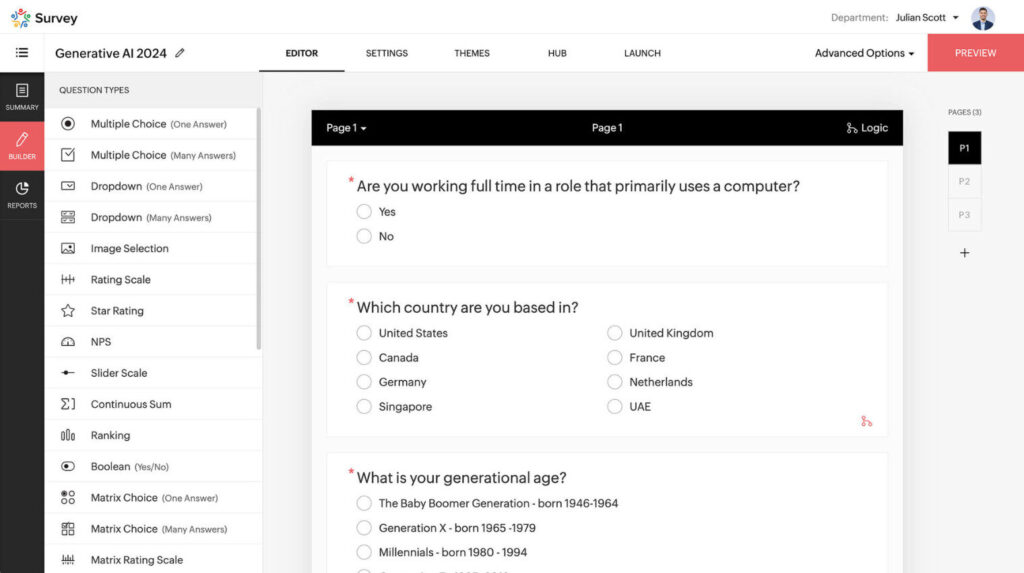
Forget generic surveys that bore respondents into submission, leading to high abandonment rates and low-quality data. The future of data collection hinges on conditional logic, and powerful free survey tools like Typeform (renowned for its beautiful, engaging interface and conversational flow) and Jotform are leading the charge. Conditional logic allows you to tailor questions based on previous answers, creating a truly personalized experience for each respondent.
Imagine a prospect expressing interest in “Product A” automatically receiving detailed follow-up questions specific to that product’s features, benefits, and pricing. Simultaneously, another prospect leaning towards “Service B” is guided down a completely different path, receiving information tailored precisely to their unique needs.
This level of personalization dramatically increases engagement rates, reduces survey fatigue, and significantly boosts the quality and relevance of the data collected. For savvy marketers in 2025, this means more qualified leads, clearer insights into nuanced customer preferences, and the ability to craft highly effective, targeted marketing campaigns that truly resonate.
Integration is Non-Negotiable: Connecting Your Marketing Ecosystem
In 2025, a standalone form is an isolated island of data, quickly becoming a relic of the past. The real power of free survey tools for marketing lies in their ability to seamlessly integrate with your existing marketing stack. Google Forms, for example, remains a solid, accessible option, particularly for quick polls and internal feedback, largely due to its effortless integration with Google Sheets and other Google Workspace applications. This native connectivity makes data analysis and sharing incredibly straightforward for teams already entrenched in the Google ecosystem.
However, for a truly interconnected and automated marketing operation, the power of third-party integration platforms like Zapier cannot be overstated. Zapier allows you to connect virtually any of these free survey tools to your CRM (e.g., Salesforce, HubSpot), email marketing platform (e.g., Mailchimp, ActiveCampaign), project management software (e.g., Trello, Asana), or even custom databases.
This automation ensures that survey responses immediately trigger follow-up emails, update lead statuses, create tasks for your sales or support teams, or segment your audience for future campaigns.
This process transforms raw data into immediate, actionable workflows, saving countless hours of manual data entry and ensuring no valuable insight is left unaddressed. Without robust integration, your collected data loses much of its strategic value and potential for immediate impact.
Mobile-First is Mandatory: Reaching Audiences Everywhere
With over half of all online interactions, including form submissions and surveys, now happening on mobile devices, a mobile-first approach is not just a best practice – it’s an absolute mandatory requirement for successful marketing in 2025.
Any survey or form that isn’t perfectly optimized for mobile will suffer from high abandonment rates, incomplete data, and ultimately, a missed opportunity to connect with a significant portion of your audience.
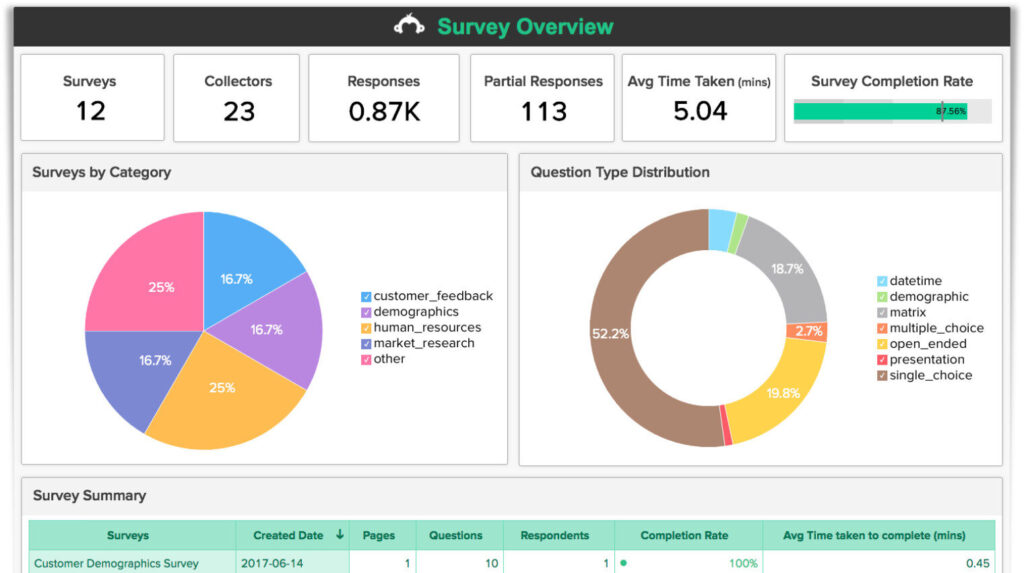
Tools like SurveyMonkey (a robust option offering advanced analytics and reporting features) and Zoho Survey inherently prioritize mobile responsiveness, ensuring that forms adapt beautifully and functionally to any screen size, from the smallest smartphones to larger tablets.
This guarantees a smooth, intuitive, and frustration-free experience for users on any device, making it easier for them to complete your surveys, regardless of where they are or what device they are using.
Marketing teams must always diligently test their forms on multiple devices and operating systems before launching to catch any potential display or usability issues. A frictionless mobile experience is paramount to maximizing response rates and gathering comprehensive customer insights in the competitive digital landscape of 2025.
Beyond the Usual Suspects: Emerging Trends & Hidden Gems
While industry giants like Typeform and Google Forms offer reliable and well-known solutions for free data collection, the market for free survey tools is remarkably rich with innovation. Several lesser-known but incredibly powerful platforms are emerging, offering unique capabilities that can provide a distinct competitive advantage for marketers willing to explore beyond the usual suspects.
These tools are often specialized, catering to niche needs or offering a fresh, often more creative, approach to form design and functionality, making them invaluable for specific marketing objectives.
Cognito Forms: Power for Complex Data Handling
For marketers dealing with intricate data collection scenarios that go beyond basic questions, Cognito Forms stands out as an exceptionally powerful option among free survey tools. It excels at creating complex forms with advanced calculations, custom workflows, and even seamless payment integrations.
This makes it an ideal solution for a wide range of sophisticated applications, such as event registration forms that automatically calculate ticket prices, apply discounts, and manage attendee details; detailed order forms for products with multiple variations and configurable options; or even sophisticated application forms requiring intricate data validation and multi-step processes.
Its robust backend capabilities allow for a deeper level of data handling, conditional logic, and automation than many standard free tools, making it a hidden gem for businesses and agencies with specific, demanding data requirements.
Formstack: HIPAA Compliance & Enterprise Features (Free Plan)
While Formstack isn’t entirely free across all its premium features, its free plan offers a surprisingly robust amount of functionality, particularly in areas crucial for specialized industries. A significant benefit, especially for healthcare marketers, is its strong emphasis on HIPAA compliance.
This makes Formstack an invaluable tool for securely collecting sensitive patient data, ensuring that your data collection practices adhere to stringent regulatory standards and maintain patient privacy.
Beyond compliance, Formstack also offers enterprise-level features even on its lower tiers, such as advanced security options, audit trails, and user permissions, making it a compelling choice for businesses that anticipate scaling their data collection efforts or require enhanced security and data governance from the outset.
It’s a powerful option for those who need more than basic form building without a significant initial investment, especially where data sensitivity is a concern.
Paperform: Visual Appeal & Landing Page Aesthetics
For marketers whose primary goal is lead generation, brand storytelling, and creating an immediate visual impact, Paperform is a standout free survey tool. This innovative platform allows you to create forms that look and feel less like traditional, rigid questionnaires and more like beautifully designed, interactive landing pages.
Its intuitive, free-form editor lets you embed images, videos, and rich text directly into your form, transforming a typically utilitarian element into an engaging and brand-consistent experience.
This high level of visual appeal is perfect for capturing attention, telling a cohesive story, and seamlessly guiding users through a conversion funnel.
Whether you’re building a contest entry form, a lead magnet download, a detailed customer feedback survey, or a multi-step application, Paperform ensures your forms are not just functional but also aesthetically pleasing, highly interactive, and remarkably effective at driving engagement and conversions.
Why This Matters to Marketers & Agencies in 2025
The strategic deployment of these advanced free survey tools in 2025 is not merely an operational efficiency; it’s a fundamental competitive differentiator. Marketing and advertising agencies, alongside in-house teams, who master these platforms will gain an unparalleled advantage in customer understanding and responsiveness. This isn’t just about collecting more data, but about transforming that data into intelligent action across every touchpoint of the customer journey. Here’s how these tools will become absolutely indispensable for achieving marketing success:
- Hyper-Personalization at Scale: The granular, dynamic data collected through these intelligent forms will directly fuel increasingly personalized marketing campaigns.
From highly segmented email sequences that speak directly to individual pain points, to dynamic website content that adapts based on user preferences and past interactions, to retargeting ads that reflect recent engagement – personalization will move beyond basic segmentation to a true 1:1 customer experience, all powered by direct, real-time feedback. - Proactive Customer Service: Imagine identifying customer pain points and potential frustrations before they escalate into complaints or churn. Surveys can be deployed at critical junctures (e.g., post-purchase, after a support interaction, after using a new product feature) to gather immediate, contextual feedback.
This allows for proactive customer service interventions, enabling teams to address issues swiftly, improve satisfaction dramatically, and build stronger brand loyalty, effectively turning potential detractors into vocal advocates. - Agile Product Development: Product teams often operate in a vacuum, relying on assumptions or limited internal feedback. Free survey tools break down these silos by enabling direct, continuous feedback loops from the target audience. Gather insights on new feature ideas, test product concepts, collect usability feedback on beta versions, or prioritize roadmap items directly from user input.
This iterative, user-centric approach ensures you’re building products and features that your audience genuinely wants and needs, significantly de-risking development cycles and accelerating time to market. - Lead Qualification & Scoring: Intelligent forms with conditional logic and advanced fields can automatically qualify leads based on their responses.
By asking targeted questions about budget, timeline, specific needs, company size, or critical pain points, forms can assign lead scores in real-time, instantly categorizing prospects. This means your sales team receives pre-qualified, warm leads, saving them valuable time and allowing them to focus their efforts on prospects most likely to convert.
This automation streamlines the sales funnel and dramatically improves sales efficiency. - Content Strategy Refinement: Stop guessing what content resonates with your audience. Use surveys to ask your audience directly what topics they’re interested in, what specific challenges they need help solving, what content formats they prefer (e.g., blog posts, videos, webinars, infographics), and where they consume content.
This direct feedback allows you to refine your content strategy, create highly relevant blog posts, videos, whitepapers, and guides that address real audience needs, and ultimately drive higher engagement, organic traffic, and conversion rates across all your content marketing efforts.
Actionable Takeaways: Start Building Your Data Advantage Today
The competitive landscape of 2025 won’t wait for your marketing team to catch up. Don’t fall behind by clinging to outdated, static data collection methods. The power of free survey and form building tools is accessible right now, offering a tangible competitive advantage for those willing to embrace them. Here’s a practical roadmap to start building your data advantage today and ensure your marketing efforts are future-proof:
- Identify Your Data Needs: Before diving into specific tools, clearly define what information you *really* need to gather. What marketing questions are currently unanswered? What customer insights would unlock new strategies or improve existing campaigns?
Focus on specific, measurable goals – whether it’s lead qualification, customer satisfaction scores, content ideas, or product feedback – to guide your tool selection and form design. A clear objective prevents aimless data collection and ensures you’re gathering truly valuable information. - Choose the Right Tool: With so many excellent free options available, selecting the right one depends heavily on your specific requirements and constraints.
Consider your budget (even free plans have limitations on responses or features), the complexity of the forms you need to build, and your integration needs with your existing marketing stack. Start with a free plan of a few contenders (e.g., Typeform for engagement, Google Forms for simplicity, Jotform for versatility) and experiment.
You can always upgrade as your needs grow and you identify the best fit for your unique workflows and marketing objectives. - Focus on User Experience (UX): No matter how sophisticated your chosen tool, a poor user experience will inevitably kill your response rates and yield incomplete data. Always keep forms concise, asking only essential questions that align with your objectives.
Ensure they are mobile-friendly and visually appealing, consistent with your brand’s aesthetic. Use clear, unambiguous language, and design a logical flow that guides users effortlessly through the questions. Remember, a user-friendly form encourages completion and yields significantly higher quality data. - Automate Your Workflow: The true power and efficiency come from connecting your form builder to your other marketing and sales tools.
Leverage native integrations or a powerful platform like Zapier to automate data transfer. For instance, when a form is submitted, automatically add the new lead to your CRM, trigger a personalized welcome email sequence, create a follow-up task for your sales team, or update a project management board with new feedback.
This automation reduces manual effort, eliminates data silos, and ensures that valuable data is immediately actionable. - Analyze & Iterate: Data collection is only the first step; continuous analysis is key. Regularly review your data, looking for trends, patterns, unexpected insights, and areas for improvement in both your forms and your marketing strategies. Are certain questions being skipped consistently?
Are responses providing the expected depth of insight? Based on your findings, make iterative adjustments to your forms, refine your survey questions, and adapt your overall marketing campaigns.
This continuous process of analysis and iteration is how you maximize the long-term value of your data and maintain a competitive edge.
The future of marketing isn’t about shouting louder; it’s about listening better, more intelligently, and more responsively than ever before. These free survey and form building tools aren’t just about collecting data – they’re about building deeper, more meaningful relationships with your audience by truly understanding their needs, preferences, and challenges. And that’s a competitive advantage worth investing in right now, for 2025 and well beyond.
What specific challenge are you hoping to solve with advanced free survey tools in your marketing strategy for 2025?



2 Responses
There are certainly loads of details like that to take into consideration. That could be a nice point to deliver up. I supply the ideas above as normal inspiration but clearly there are questions just like the one you deliver up the place the most important factor will probably be working in sincere good faith. I don?t know if best practices have emerged around issues like that, but I’m sure that your job is clearly identified as a good game. Both boys and girls really feel the impact of only a moment’s pleasure, for the rest of their lives.
I would like to thnkx for the efforts you have put in writing this site. I’m hoping the same high-grade website post from you in the upcoming also. Actually your creative writing abilities has encouraged me to get my own website now. Actually the blogging is spreading its wings quickly. Your write up is a good example of it.