


The age of simple pay-per-click management is over. What was once a straightforward bidding war has evolved into a complex, algorithm-driven battlefield – one where data is infinite, CPCs are rising, and automation reigns supreme. In this new landscape, marketers can no longer rely on instinct, manual tweaks, or outdated “set-and-forget” methods.
In this evolving landscape of PPC, understanding the nuances of each platform is crucial for success.
Every marketer must adapt and thrive in the world of PPC to maintain a competitive edge.
Your PPC campaigns should be a reflection of your brand’s identity and strategic goals.
2025 demands more than management – it demands mastery.
Success now hinges on building a sophisticated, integrated PPC ecosystem – a tech-enabled command center that automates the mundane, scales creative production, and empowers you to focus on high-level strategy, human insight, and long-term growth.
Effective PPC strategies often incorporate multiple channels to maximize reach and engagement.
Utilizing tools to analyze PPC performance is essential for ongoing success.
This isn’t about finding a single “miracle tool.” It’s about constructing a smart, interconnected stack that transforms your ad spend from a reactive cost into a proactive growth engine. Drawing from insights featured in Zapier’s 2025 PPC tool report, we’ve broken down the essential technologies every performance marketer should have in their arsenal – and how to deploy them for maximum ROAS and strategic clarity.
1. The Intelligence Layer: Reverse-Engineer Your Competition
Before you invest a dollar, you need a battlefield map.
In 2025, keyword research is no longer discovery – it’s espionage. Understanding how your competitors spend, structure, and scale their campaigns gives you the edge to move smarter, faster, and more profitably.
The Tools: Semrush & SpyFu
Mastering PPC requires a blend of creativity and analytical skills.
Data-driven insights can transform your PPC campaigns into powerful growth engines.
In PPC, understanding user behavior is key to creating effective ads.
Continuously refining your PPC strategy can lead to significant improvements over time.
Regular audits of your PPC campaigns can help identify areas for optimization.
Think of these as your dual lenses for market clarity:
- Semrush delivers the macro view – a full-suite powerhouse offering deep insights across SEO, PPC, content, and social.
- SpyFu zooms in – a surgical intelligence tool for dissecting competitor ad strategies with speed and precision.
Together, they give you both the strategic altitude and tactical precision to identify profitable opportunities before others do.
The Insight: Data Is the New Recon
These platforms are no longer simple keyword finders — they’re strategic intelligence engines. They reveal your competitors’ best-performing keywords, ad copies, landing pages, and even their estimated monthly budgets. This is transparency at scale, and it’s your blueprint for outmaneuvering the competition.
Leveraging automation in PPC management can enhance campaign efficiency.
The 2025 Strategy: Competitive Foresight Over Hindsight
Never underestimate the power of A/B testing in your PPC efforts.
Effective use of visuals can significantly improve PPC ad performance.
Don’t just spot gaps – interpret intent.
Ask:
- Where are they consistently outspending you? That’s where the profit lies.
- Which ad angles and CTAs have survived 90+ days? Those are proven winners.
- Which landing pages drive their conversions? Study their experience, improve it, and outperform them.
Use Semrush for your broad intelligence gathering and SpyFu for agile, laser-focused teardown sessions. The combination ensures you’re never flying blind – or playing catch-up.
2. The Creative Engine: Scale Ideas, Not Just Ads
Creative fatigue kills campaigns faster than budget constraints. As CTRs fall and costs rise, the biggest bottleneck isn’t budget – it’s creative velocity.
The Tool: AdCreative.ai
AI isn’t here to replace your creative team – it’s here to amplify them.
AdCreative.ai generates hundreds of high-performing ad variations in minutes – intelligently analyzing your assets, audience data, and benchmarks to predict what will drive engagement and conversions.
Engaging content is vital to achieving your PPC goals.
The Insight: AI = Creative Volume + Creative Velocity
In 2025, speed is the ultimate differentiator.
AI enables rapid-fire testing across tones, visuals, and CTAs – accelerating discovery of what resonates most. You’re not guessing anymore – you’re iterating based on data-backed creative intelligence.
Your PPC strategy should evolve as market conditions change.
The 2025 Strategy: Adopt a “Volume + Velocity” Model
- Generate Broadly – Use AI to create a variety of ad concepts, tones, and visuals.
- Test Rapidly – Let real-world performance filter out top performers using metrics like CTR and conversion rate.
- Refine Intelligently – Let your creative team polish and amplify what the data validates.
This symbiosis – machine efficiency + human nuance – fuels campaigns that evolve faster, resonate deeper, and scale smarter.
3. The Automation Core: Optimize 24/7
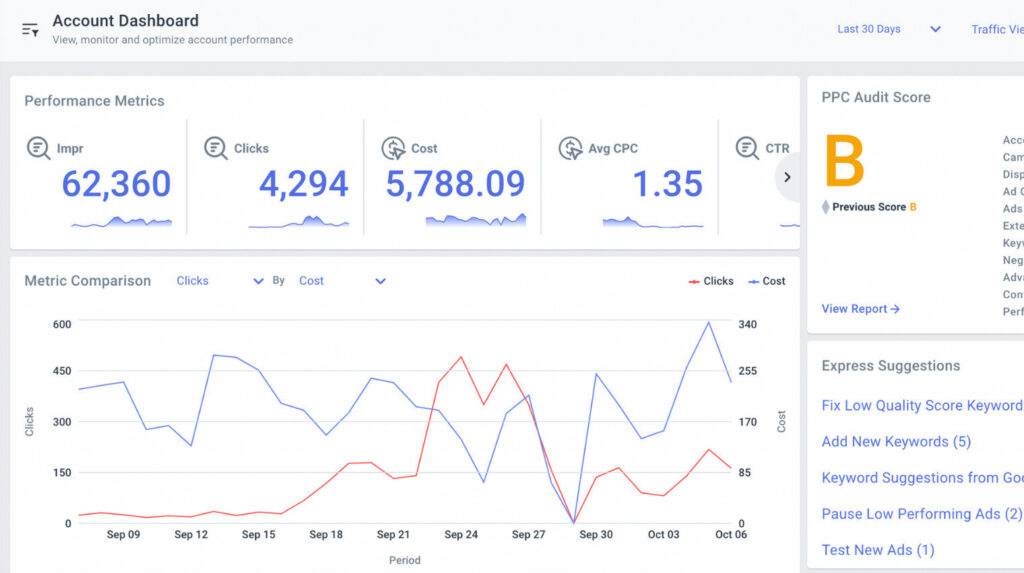
Ad platform automation (think Performance Max, Smart Campaigns) is powerful – but not always aligned with your business objectives. Their algorithms serve the platform; you need one that serves your strategy.
The Tools: WordStream, Optmyzr, Adalysis
These are your tireless optimization analysts – continuously scanning your campaigns for wasted spend, missed opportunities, and optimization gaps.
- WordStream is ideal for SMBs or marketers seeking guided, time-efficient optimizations.
- Optmyzr and Adalysis are built for power users and agencies – offering deep rule-based automation, A/B testing, and custom script capabilities.
The Insight: Control Beyond Native Automation
Native tools automate; third-party platforms strategize. They give you granular control – enabling custom workflows, independent analysis, and precision optimizations that platforms often obscure.
The 2025 Strategy: Tailor Automation Around Your KPIs
Use automation not to replace human strategy but to extend it.
Deploy these platforms as intelligent co-pilots – ensuring every bid, keyword, and test aligns with your unique growth goals.
The marketers who master hybrid automation will be the ones who scale profitably while competitors chase platform defaults.
4. The Conversion Catalyst: Own the Post-Click Experience
Clicks don’t pay the bills – conversions do. A brilliant ad leading to a weak landing page is wasted potential. The post-click experience is where you transform interest into intent – and intent into revenue.
The Tool: Unbounce
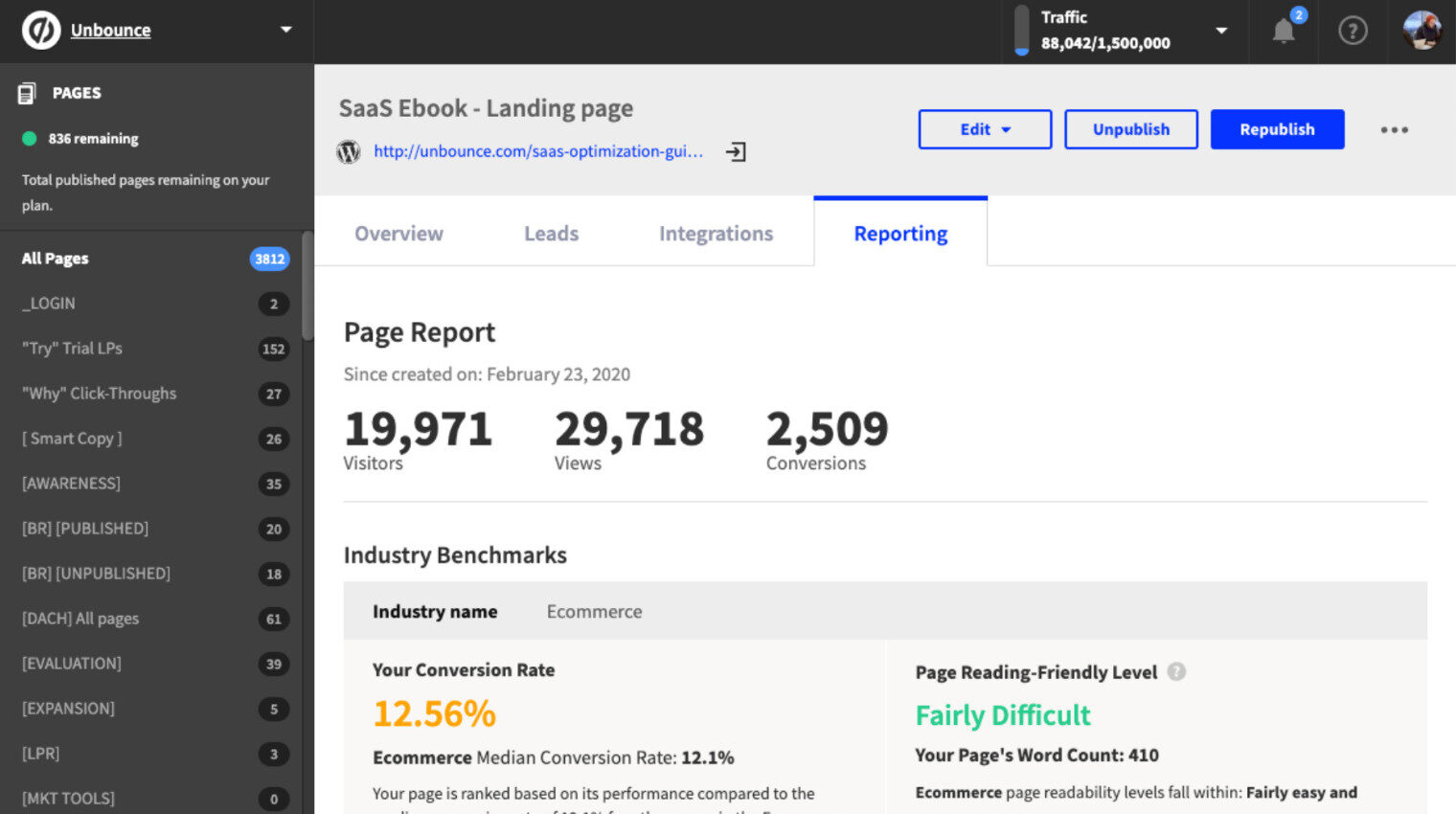
Built for marketers, not developers, Unbounce empowers you to build and A/B test landing pages in hours – not weeks. Its AI-powered Smart Copy and Smart Traffic tools help you predict, personalize, and optimize for every visitor.
The Insight: Message Match = Conversion Magic
Your landing page must fulfill your ad’s promise – fast. A tailored landing page for every major ad group ensures continuity, relevance, and higher Quality Scores.
The 2025 Strategy: Eliminate Friction, Amplify Conversion
- Prototype Fast: Launch and test pages rapidly using drag-and-drop.
- Test Smart: Change one variable at a time – headlines, CTAs, visuals – to identify real drivers.
- Leverage AI: Use Smart Traffic to auto-route users to the highest-converting variant.
Every micro-optimization compounds into exponential ROI gains – because better conversions mean cheaper acquisitions and stronger ROAS.
5. The Final Piece: The Single Source of Truth
Stakeholders don’t want metrics – they want meaning. They care less about CTRs and more about pipeline impact, CAC, and ROI. To earn trust (and budgets), your reporting must translate numbers into strategic narratives.
The Tools: Google Analytics (GA4) + Whatagraph
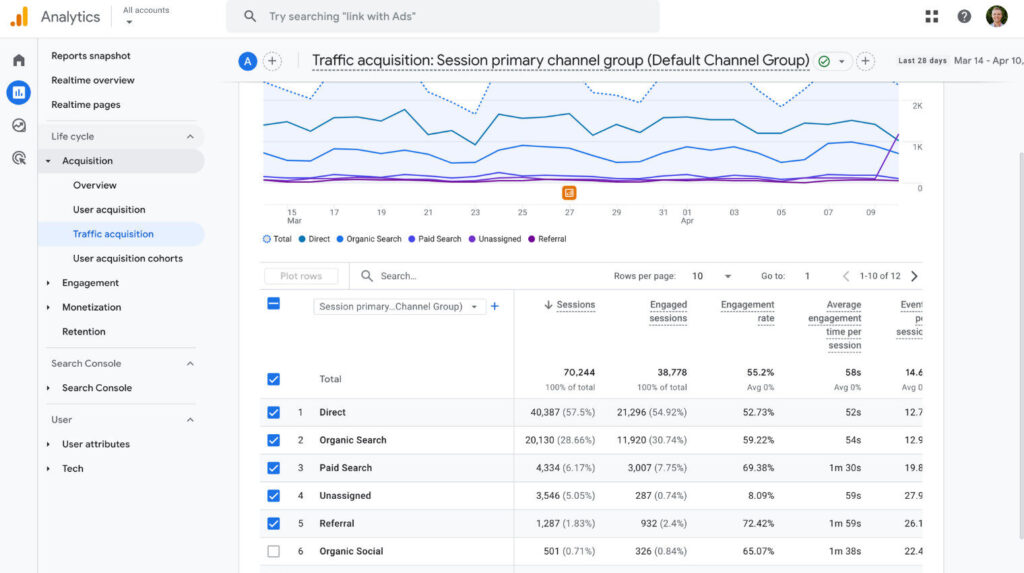
GA4 gives you behavioral depth; Whatagraph brings it all together – unifying data from Google Ads, LinkedIn, Meta, SEO tools, and email platforms into a single, visual story.
The Insight: From Fragmented Data to Unified Intelligence
When reporting is scattered, so is understanding. Consolidation brings clarity – allowing you to connect ad performance directly to business outcomes.
The 2025 Strategy: Tell a Story, Not a Spreadsheet
- Automate Reporting: Use Whatagraph or Looker Studio for real-time, visually rich dashboards.
- Focus on Business Metrics: Highlight ROAS, CAC, LTV, and revenue impact – not vanity stats.
- Add Strategic Commentary: Provide insights, context, and next steps – not just data dumps.
This transforms your reporting from reactive documentation into proactive storytelling – positioning you as a growth strategist, not just a media buyer.
The Takeaway: Build Your Stack, Build Your Future
The PPC leaders of 2025 won’t win through manual optimizations or quick fixes. They’ll win by architecting intelligent systems – ecosystems that merge human creativity, algorithmic precision, and strategic automation.
Ask yourself:
- Where are the manual bottlenecks draining your time?
- Where are data silos clouding your visibility?
- Which opportunities remain hidden because you lack the right tools?
Your tech stack is no longer optional – it’s your competitive advantage. Build it with intention, integrate it with strategy, and watch your ad spend evolve from a cost center into a predictable, scalable growth engine.
Your move:
What’s the next tool you’ll add to your 2025 PPC stack – and what bottleneck are you ready to eliminate? Stay current with PPC trends to maximize your advertising efforts.